
Credit Course for KS Kumu
Hoʻopili ʻIke
KS Ed Tech Conference Credit Course for Kamehameha Schools Faculty
- May 30 – June 30, 2026
To elevate your conference learning experience, weʻre excited to offer Hoʻopili ʻIke, a companion credit course, for Kamehameha Schools Faculty. Translated, Hoʻopili ʻIke means “to connect and deepen knowledge.” This reflects the CONNECT26 conference focus on building pilina and emphasizes kumu intentionally linking new learning, HCBE practices, and educational technology as they strengthen and apply their ʻike in meaningful ways.
*** Participants who successfully complete the course will earn 3 B credits
*** For campuses who use K-Credit, the B-credits will be translated.
3 Steps to Complete Course Registration
*** Registration Deadline: Friday, May 29 ***
STEP 1
Register for the Course in Frontline
STEP 2
Register for the KS Ed Tech Conference
STEP 3
Register for a Pre-Conference Huakaʻi
Frequently asked questions (FAQs)
The KS Enterprise Technology Division will offer this course to a maximum of 30 Kamehameha Schools educators on a first-come, first-serve basis. The course will be organized in a fashion that models a student-centered approach with the primary objective of improving educator professional practice, which ultimately intends to enhance student outcomes.
Course participants will:
- develop their own personalized learning plan by identifying the conference sessions they plan to attend during the two-day conference based on their professional learning interests
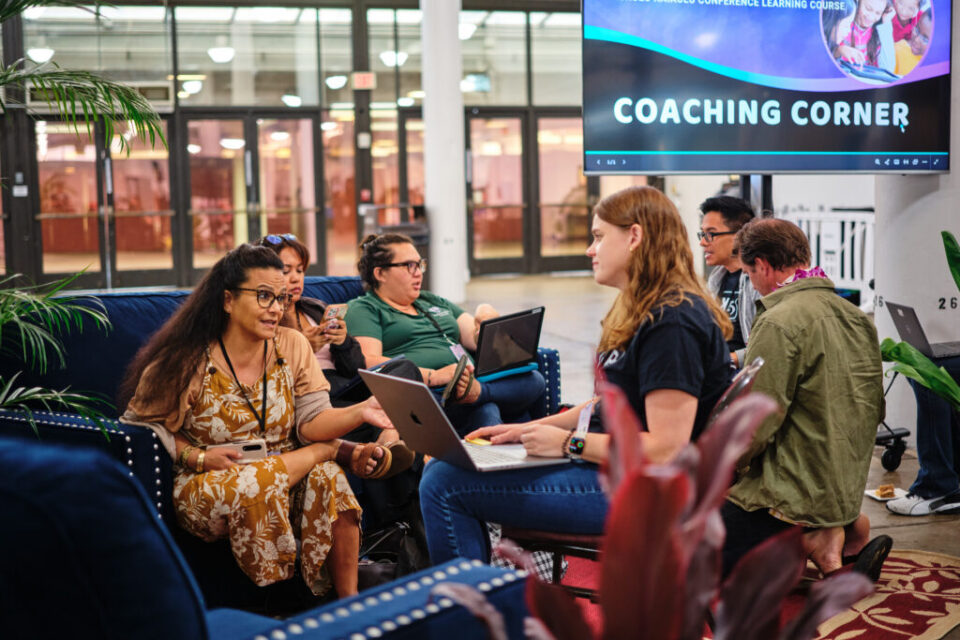
- attend a coaching session at the designated ‘Coaching Corner’. The session, facilitated by the ETS eLearn instructional designers and ETSi representatives, will support kumu design and integration strategies as kumu strengthen their connection between conference learning and their practice.
- participate in post learning activities in the Canvas course through collaborative exploration and proven strategies that leverage technology to improve student learning. (ISTE Standards for Educators – Standard 2.1 Learner):
- attend virtual synchronous sessions to share reflections of their learning and ideas for applying their learning
Eligible KS staff will be awarded 3 KS B-credits by fulfilling the following course requirements:**
- Attend one of the pre-conference activities – EdCamp Honolulu unConference event or ʻĀina Ulu Huakaʻi to Paepae o Heʻeia.
- Attend conference keynotes and breakout sessions.
- To earn the HCBE B-credit, participants must participate in the HCBE activity/game and one of the following:
- ʻĀina Ulu Huakaʻi to Paepae o Heʻeia
- Attend three or more HCBE breakout sessions
- Engage in thirty minutes of Coaching.
- Attend required synchronous sessions post conference.
- Complete and submit all required ha’awina.
** ** For campuses who use K-Credit, the B-credits will be translated
Course Run Dates 5/30/2026 – 6/30/2026 (Canvas course will open on 5/30/2026. The ha’awina will start on 6/1/2026)
Date | Location | Topic/Activities/Assignments | Credit Hours |
6/1/26 | Neal Blaisdell Center or Paepae o Heʻeia | EdCamp Honolulu to host an unConference ʻĀina Ulu Huakaʻi to Paepae o Heʻeia | 3.5 |
6/1/26 | Online | Pre-conference Reflections | .3 |
6/2/26 | Neal Blaisdell | Day 1 – Keynote | 1 |
6/2/26 | “ “ | Day 1 – Conference Sessions and HCBE Activities | 7 |
6/2/26 | Online | Day 1 – Extended learning opportunity (homework). Reflection and learning integration plan. | .3 |
6/2 – 6/3 | Neal Blaisdell | Coaching | .5 |
6/3/26 | “ “ | Day 2 – Keynote | 1 |
6/3/26 | “ “ | Day 2- Conference Sessions and HCBE Activities | 6 |
6/3/26 | Online | Day 2 – Extended learning opportunity (homework). Reflection and learning integration plan. | .3 |
6/4 – 6/21 | “ “ | Learning Integration Plan | 2 |
6/8 – 6/18 Date TBD | “ “ | Synchronous Session 1: AI Literacy | 2.25 |
6/15 – 6/24 Date TBD | “ “ | Synchronous Session 2: Hōʻike | 2.25 |
6/25 – 6/30 | “ “ | Compilation of Learning
| 3.5 |
Hours/Credits Earned (1 B-Credit = 15-hour unit of instruction)** | 30 hrs / 2 B-Credits** | ||
If the course meets the HCBE Criteria, add 1 additional credit | 1 | ||
Total Credits | 3 | ||
** For Hawaiʻi Campus kumu participants, hours will be translated to Hawaiʻi Campus K credits
Participants will have the opportunity to attend a variety of HCBE grounded breakout sessions and activities that feature Native Hawaiian presenters or cultural experts.
Alignment Focus Areas
- Course Rationale that expresses the primary purpose of cultivating kuanaʻike Hawaiʻi, and may focus on one or more KS Cultural Principles of Hawaiian Identity – ‘Ōlelo Hawaiʻi, Hoʻōla Lāhui, Aloha ʻĀina, or Loina Kamehameha.
Cultivating kuanaʻike Hawaiʻi: The breakout sessions and activities will focus on the importance of incorporating Hawaiian values, ʻŌlelo Hawaiʻi, and practices into 21st century edtech learning environments. Kumu will be able to strengthen the skills needed to thrive in a HCBE global context.
- Topics, content, and intended learning objectives that explicitly emphasize the cultivation of kuanaʻike Hawaiʻi, and may focus on one or more KS Cultural Principles of Hawaiian Identity.
The break-out sessions are crafted to ensure that participants leave with a deeper understanding and appreciation of Hawaiian cultural identity and its application in education.
- Course/conference activities and guest speakers that provide Native Hawaiian cultural experiences, which may include, but are not limited to, engaging with kūpuna, cultural practitioners, cultural protocols, and/or speakers of ʻōlelo Hawaiʻi; and include individuals with Hawaiian cultural expertise (content knowledge and/or practices).
Participants will engage in activities that provide authentic Native Hawaiian cultural experiences. This includes interaction with kūpuna, cultural practitioners, adherence to cultural protocols, and conversations with speakers of ʻōlelo Hawaiʻi. These activities are thoughtfully curated to connect learners with HCBE and Native Hawaiian values.
- Formative Evaluation options by which participants may demonstrate the conference’s impact on their HCBE development.
- Connecting with the Speakers
- Speaker Profiles: Attendees can view speaker and presenter profiles on WHOVA, which may include biographies, session details, and contact information for further engagement.
- WHOVA In-App Messaging: Attendees can send direct messages through WHOVA, asking follow-up questions or requesting further insights.
- Strengthening Learning with Other Educators
- Coaching Corner: Attendees can meet with ETS coaches to discuss how they can implement ʻike into their work.
- Synchronous Sessions: Kumu can collaborate, sharing insights from conference learning and discuss how it applies to their practice.
- Providing Evidence of Engagement
- Screenshots: Participants can take screenshots of their in-app interactions, such as messages sent to the speaker or posts made in discussion forums outside of the Canvas LMS, and share those with the course facilitators.
- Activity Reports: If needed, the conference app, WHOVA can generate reports of a participant’s activity within the app, including session attendance, messages sent, and forum participation, which can be submitted as evidence of engagement.
- Connecting with the Speakers
This structure/alignment ensures that the conference is not only informative but also transformative, aligning with the primary purpose of cultivating kuanaʻike Hawaiʻi and the KS Cultural Principles of Hawaiian Identity.