Growth Mindset – Passion and Perseverance

The brain changes following the acquisition of new skills.  However, the changes in the brain reverse when one does not have the opportunity to use, apply, and develop the skills they have learned.”

As we continue to make Growth Mindset a part of each student’s experience and outlook, we know that it can be challenging. Growth Mindset is not a matter of just changing for the sake of changing. Itʻs an intentional change with a focus or goal in mind that builds upon knowledge about where we have been and where we want to be.

It is not enough to just say, in passing, things like “stick it out” or “keep trying.” We need to take learning to the next level. To make it deeper. And we are able to make it deeper when we have an understanding of the learning landscapes and trajectories in various disciplines. Students need to be afforded opportunities to apply big ideas and skills to relevant situations.

Growth Mindset is not about being a cheerleader, for yourself or others. Itʻs about recognizing that real learning is the application of skills and content that are challenging and rigorous and have been supported intentionally through instruction.

In this video, Angela Lee Duckworth, talks about what it takes to be successful across multiple settings, including school.

“Growth Mindset is the belief that the ability to learn is not fixed, it can change with effort. Dr. Dweck’s research has shown that when kids read and learn about the brain and how it changes and grows in response to challenge, they’re much more likely to persevere when they fail, because they don’t believe that failure is a permanent condition.

Growth Mindset is a great idea for building grit, but we need more. We need…

…to take our best ideas, our strongest intuitions and test them

…to measure whether we’ve been successful

….to be willing to fail, to be wrong, to start over again with lessons learned

We need to be gritty about getting our students grittier.” 

What is a challenge?

Itʻs not an impossible task. Itʻs a task that has been developed by the teacher and designed for particular students based on where those students are in their learning. It is a task that is strategic and intentional, and with effort and perseverance (and mistakes) kids can ultimately be successful at it.

Finally, we wanted to share a short video of some of our own students talking about the challenges they face at school.

https://vimeo.com/244741448

 

Growth Mindset…Taking it Deeper

Here are some resources and activities that can help us think about the changes we might need to make in our classrooms to support growth mindset in teaching and learning. Thank you to all those you joined us on Wednesday to share and discuss!


Activity 1: Growth Mindset “In Action”

Directions:

  1. Scan one of the QR codes below and view a video
  2. Watch the video again. While viewing, list Growth Prompts you might want to use in your classroom (use this Growth Prompts template: Growth Prompts).
  3. Scan the next QR code and view a new video and repeat steps 1-2.

Praise the Process: Build a Growth Mindset


Encouraging Students to Persist Through Challenges


Activity 2: The Learning Pit

James Nottinghamʻs work has centered on what he calls The Learning Pit or The Learning Challenge.  As you can infer from experience, The Learning Pit is that point where students struggle with differences of ideas, assumptions, and current beliefs in order to arrive at deeper learning that will transfer to new understandings.  In this video (scan QR code below), he and Carol Dweck talk about the relationship of a growth mindset and The Learning Pit.


Questions to guide your thinking:

  • Which of Nottinghamʻs  descriptions of growth mindset behaviors and speech patterns resonate with you?
  • What do you agree/disagree with what they say about the learning process?
  • Nottingham talks about the importance of “collegiality.” Why would going into The Learning Pit with your students be important?

Activity 3: Misinterpreting Growth Mindset

  1. Scan the QR code below.
  2. In the top right of your screen tap on the share button.
  3. If you want to annotate the PDF tap on Notability. If you want to save it to your iPad to read later, tap on Save PDF to iBooks. You will then be able to access it in iBooks at any time.
  4. As you are reading think about the misconceptions that you or your students might have about growth mindset.


Please share any thoughts you have about growth mindset including your reactions to these activities, things that you are doing, or would like to do in your classroom on our Growth Mindset Mana’o Garden! Or, feel free to comment on this post!

Growth Mindset…. Part Two!

Welcome back to a second post on Growth Mindset! There is so much to learn and think about and we’d like to support our continued learning on this topic.

We thought a great question to ask would be: How are we beginning to think about and use growth mindset at our kula?

Here’s a video we created to help you answer that question!

https://vimeo.com/234082095

But, changes in practice can be hard! We know this! Sometimes it is helpful to see what growth mindset looks like “in action” with students in classrooms. We found the video below to be very helpful in visualizing the support of growth mindset and we have added our mana’o in the blue bubbles that you’ll see throughout the video.

Finally, a great way to think about how you are putting some of these growth mindset ideas into practice is by taking this mindset self-assessment. Just click here and you’ll be asked a series of questions. After you answer them and submit you’ll get a list of ideas based on your answers. It’s pretty neat!

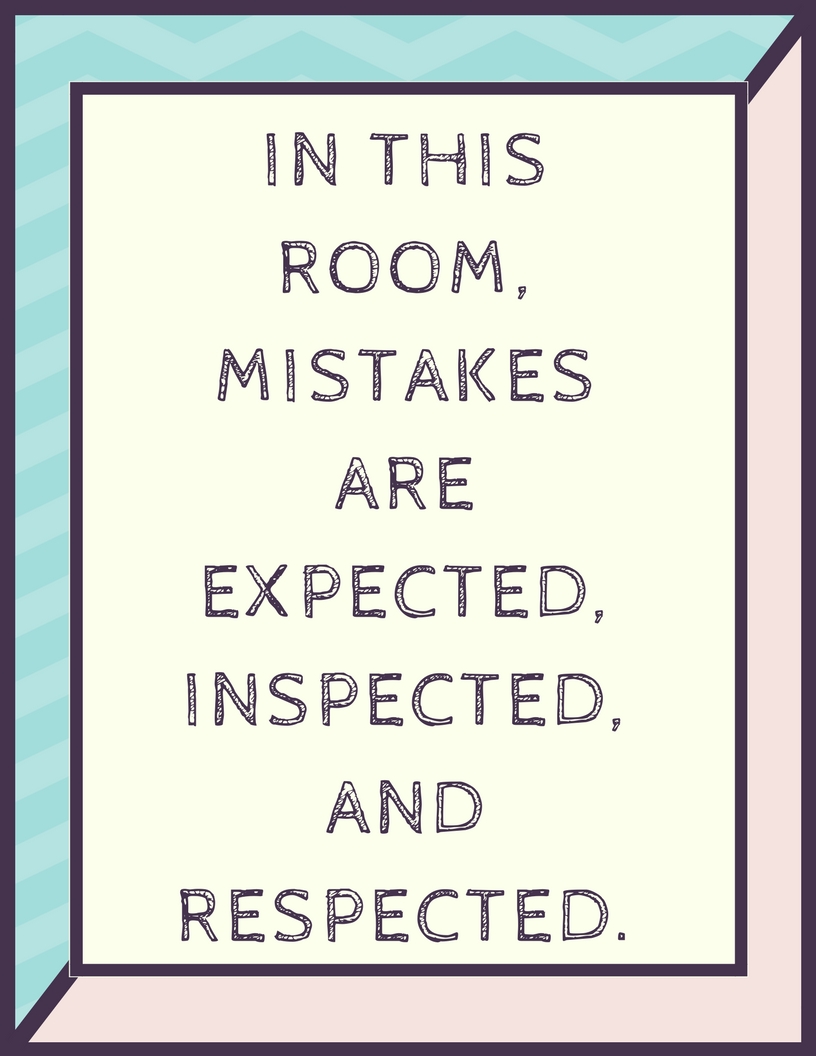
We have borrowed one of the posters from the video and created our own version of it:

If you love this quote as much as we do you can print it by clicking here!

Do you have any ideas, thoughts, questions, wonders? Please add them here on our Growth Mindset mana’o garden!

Growth Speak: Supporting a Growth Mindset with Language

In Carol Dweckʻs Mindset: The New Psychology of Success she shares the following message:

“Change isnʻt like surgery.  Even when you change, the old beliefs arenʻt just removed like a worn-out hip or knee and replaced with better ones.  Instead, the new beliefs take their place alongside the old ones, and as they become stronger, they give you a different way to think, feel, and act.”

When it comes to instilling the growth mindset we are the luckiest people in the world!  Everyday we get to cover our keiki with the belief that they are growing all the time, in many ways.  We get to nurture the belief within them that every challenge is learning-in-disguise.

The strongest tools in this work are language patterns that support the growth mindset.  When Karen first learned of Carol Dweckʻs work several years ago, she made a commitment to change the language she used with her students – and here she is today, still biting her tongue when she hears herself blurt out “good job” or “youʻre so smart” or “Finished already? Great!”  Old habits living next to new beliefs.

Here is a link to the chart that Karen will be using as a resource. We hope you are able to use it as well! 

As a way of continuing the conversation and sharing all our ideas we created this online “mana’o garden” using padlet that all of us can add to! Just click here to share your mana’o about Growth Mindset.