
Check out the recorded sessions : Edpuzzle(8.5.20) Padlet(8.6.20)
Another resource of interest is the interactive Princess Pauahi online storybook. Click here or on the image below to see the book.

Epic! is an e-book library that includes lots of books sorted by age group and genre. A few of the titles are actually read alongs so students can go through these stories on their own. They even have books related to Hawaiʻi and ʻŌlelo Hawaiʻi. This is an approved KS tool and you can share these stories with the keiki from your computer or your iPad — they have an app! Click here to sign up for your free educator account (you can sign in using your KS Google account).
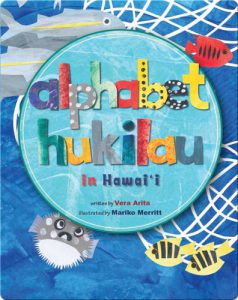
Here are a few examples of the books they carry:

Mahalo Wendy for sharing this resource!

Aloha mai kākou,
Please save the date and share! 🙂
The 2017 HITC planning committee is excited to confirm March 31, 2017 for our annual Hawaii Island TechEd Collaboration Conference at Kamehameha Schools, Hawai’i. As in previous years, the conference is FREE of charge. The HITC planning committee is also pleased to issue a call for presenters. To submit a proposal, please click on the call for presenters tab at our Conference Website, http://blogs.ksbe.edu/hitc2017/ or simply click here.
Proposal Deadline: January 15, 2016
Additional information is coming soon, including this year’s Keynote and featured presenters.
Mahalo,
The HITC Planning Committee
Try an Hour of Code! In learning to code, students gain and develop 21st century skills as well as their problem-solving, sequencing, logical, and analytical thinking skills. Many of the coding activities can also be tied to other subject areas such as math or science. Code.org provides a number of different hour-long activities for different age and ability levels, as well as types of technology — from computers and tablets to no technology at all (check out their activities here). Students can do the activities individually, in pairs, groups, or even with their parents!
Learn How to Run an Hour of Code by watching the video below:
See how 3rd and 5th grade elementary students worked together at Sunset Elementary last year:
See elementary school students working in pairs with iPads during the 2015 Hour of Code:
Print a Goal Plan:
https://www.youtube.com/watch?v=RZ5jXvGc8Yw
Add a Student (Already in System)
https://www.youtube.com/watch?v=FJhNn2HSRt0
In fifteen years we’ll be teaching programming just like reading and writing…and wondering why we didn’t do it sooner.
-Mark Zuckerberg
Why computer science?
Every student should have the opportunity to learn computer science. It helps nurture problem-solving skills, logic and creativity. By starting early, students will have a foundation for success in any 21st-century career path.
Join Hour of Code!
The Hour of Code is a one-hour introduction to computer science that shows how anybody can learn the basics. It takes place each year during Computer Science Education Week (December 5-11), but you can host an Hour of Code all year round.
How do I participate in the Hour of Code?
Start planning here by reviewing our how-to guide. You can organize an Hour of Code event at your school or in your community. Or, just try it yourself when Dec. 5 arrives.
I don’t know anything about coding. Can I still host an event?
Of course. Hour of Code activities are self-guided. Simply pick the tutorial you want, pick an hour, and we take care of the rest. We also have options for every age and experience-level, K-12.
We have Hour of Code tutorials that work on PCs, smartphones, tablets, and some that require no computer at all! You can join wherever you are, with whatever you have.
For more information, visit https://hourofcode.com/us#join.
For support, please contact Bhonna or Bryan.
Your Instructional Tech Specialists need your kōkua! In order to better serve and support you in the future, and provide training to help increase the use of technology to transform instruction, please fill out the Kealapono Technology Needs Form survey by Mon., 11/28, with your thoughts and opinions regarding technology use. The results of the survey will be used to help us find ways to support and provide instructional technology integration solutions and strategies that work for you. Mahalo!