
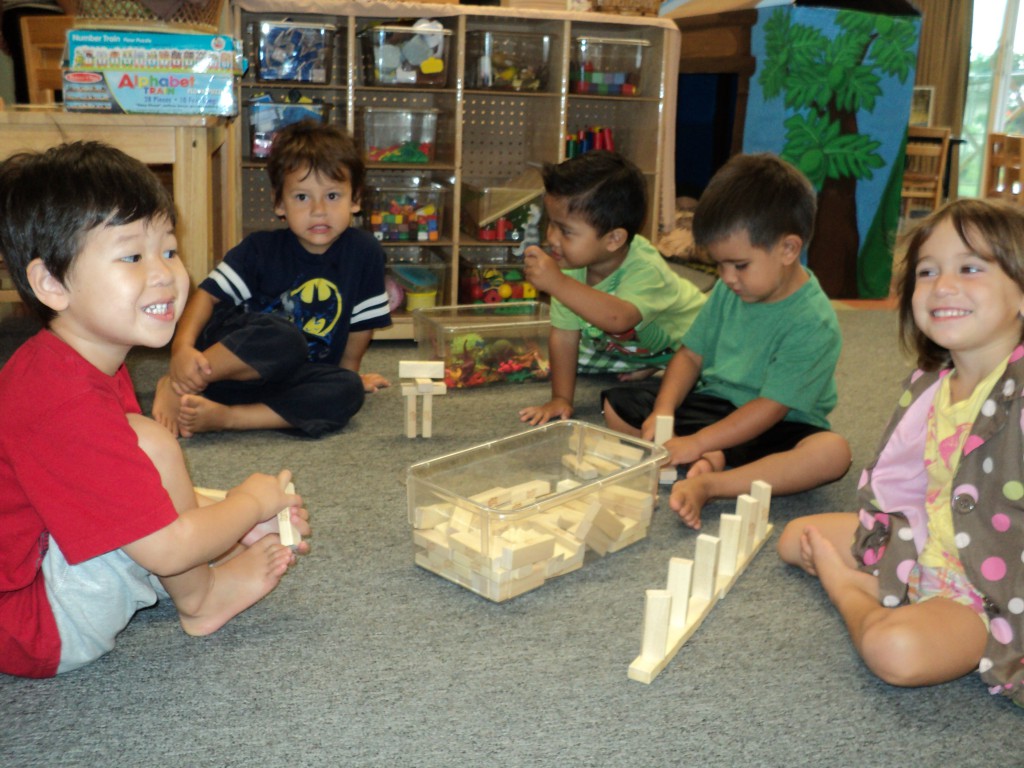
 In our classroom, you will notice that we have many natural materials. Natural geometric blocks strengthen observation skills by inspiring children to sort, compare, and classify woods by their relative hardness, color, and/or texture. The consistent geometric shapes of the blocks also allow structure to be quite sturdy and elaborate. Are you familiar with the game “Jenga”? The wood pieces that are used for that game are an example of a natural geometric block. In fact, we have two sets available for the children to use. In this picture you will notice that two children are using a different pattern to create their structures (one structure is horizontal and the other is vertical). This is a reminder that we need to honor how children approach a task using the same materials differently.
Monthly Archives: September 2012
Tuesday, September 25, 2012
Today was our walking field trip to Papahana Kuaola. We had nice overcast weather, so it turned out to be a cool day with no rain. Our guides, Uncle Mahi and Aunty Mahea, talked more than our three year old keiki were used to. They did some “indoor classroom” talk and we walked up to the waterfall area. When we finally got to the lo’i area, our children were ready for lunch. So, we didn’t get into the muddy lo’i, but the children did walk across a cold mountain stream and across muddy grass. We have two more scheduled visits to Papahana Kuaola during the later part of the school year. We will tailor those visits to include more hands-on experiences. Throughout the year, the pictures we take on our field trips will be compiled into a memory book that each child will get at the end of the year. Mahalo to all our chaperones who did a fabulous job today helping all of the keiki!
Monday, September 24, 2012
Today the children helped plant flower seeds. We planted marigolds, sunflowers, and nasturtiums because they germinate quickly and are easy to grow. Young children who develop a love for gardening grow into adults with a passion for plants and respect for the environment. We use plants as a teaching tool because research shows that gardens and garden activities not only improve children’s environmental attitudes and connect them with nature, they also provide an engaging context for learning core subjects. 
Friday, September 21, 2012
“Rug Toys” are available for the children to use on a daily basis. The toys are fun, bright, and stimulating. These toys allow the children to make independent good choices, provide them with opportunities to play nicely and share with others, allow them to practice daily how to play with it properly and put it away correctly, help to strengthen their fine motor skills, and help to develop their eye-hand coordination. Many times we will see children lining up toys. In this picture, two boys did it with small plastic dinosaurs. It is perfectly normal for a child this age. They are noticing the similarities and differences between objects and learning to group like with like which is a most important cognitive tasks. 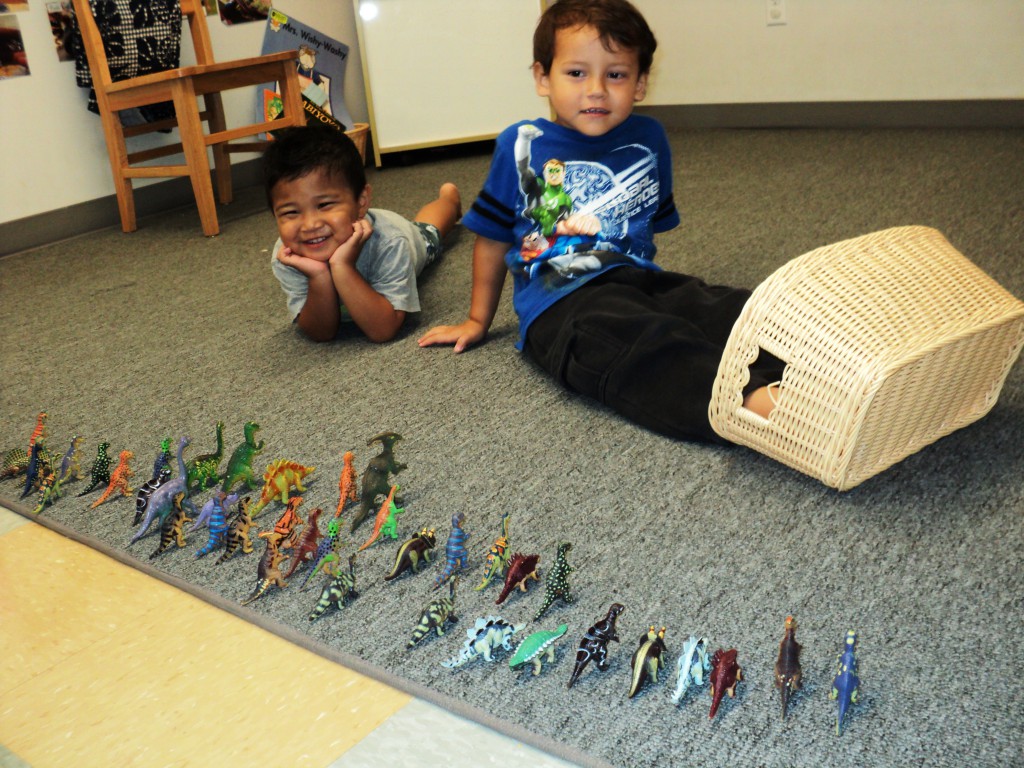
Thursday, September 20, 2012
The first instrument that we expose the children to, in the classroom, is egg shakers. Egg shakers are an excellent tool to use during music instruction because it is easy to play and does not require previous experience. Music in the preschool classroom obviously provides pure enjoyment for young children. Music is a pathway that supports social-emotional, language, mathematical, cognitive, physical, and creative development. Also, music experiences teach children to be part of a social group. All children have music potential. Our goal is to help build basic music competence (a sense of rhythm and tone) in all of them. 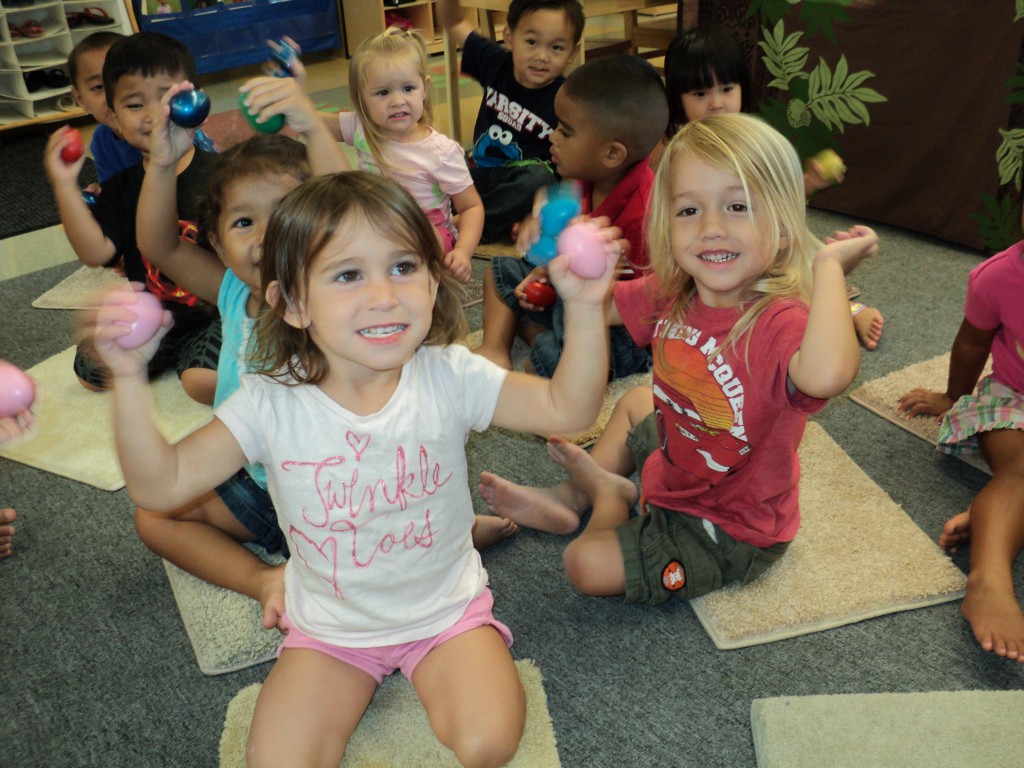
Wednesday, September 19, 2012
This week’s big book is entitled, A Party. It is a story about different things at a tea party. It was only natural to put toys and props in the Dramatic Play area so that the children could make their own pretend tea party.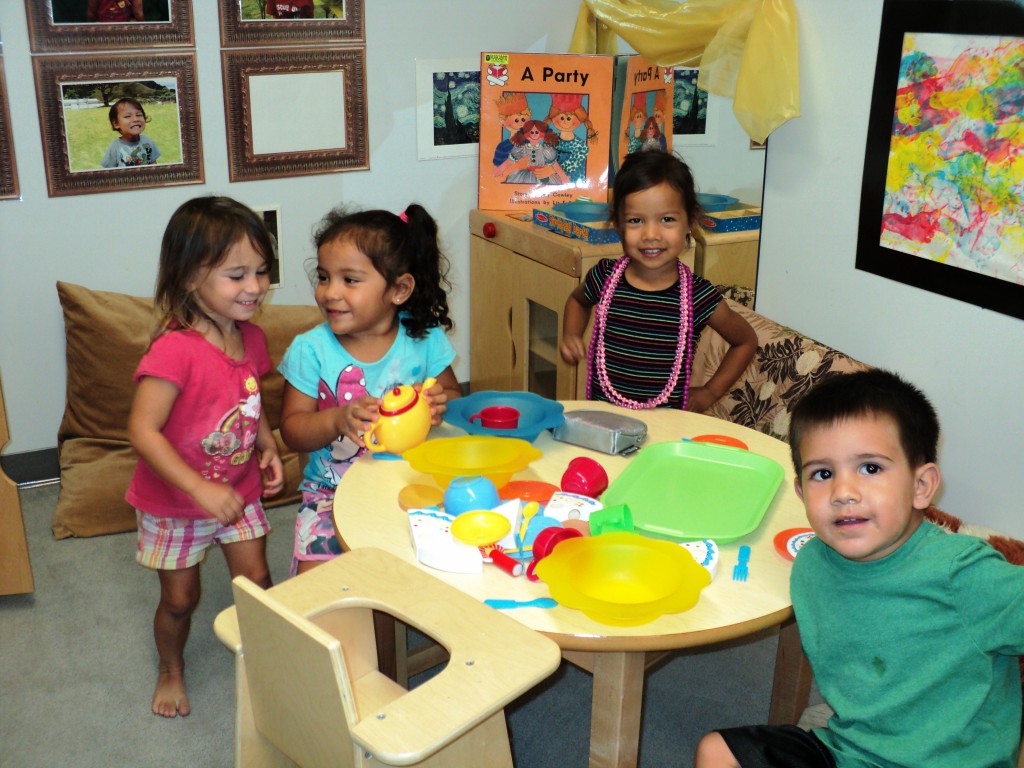
Tuesday, September 18, 2012
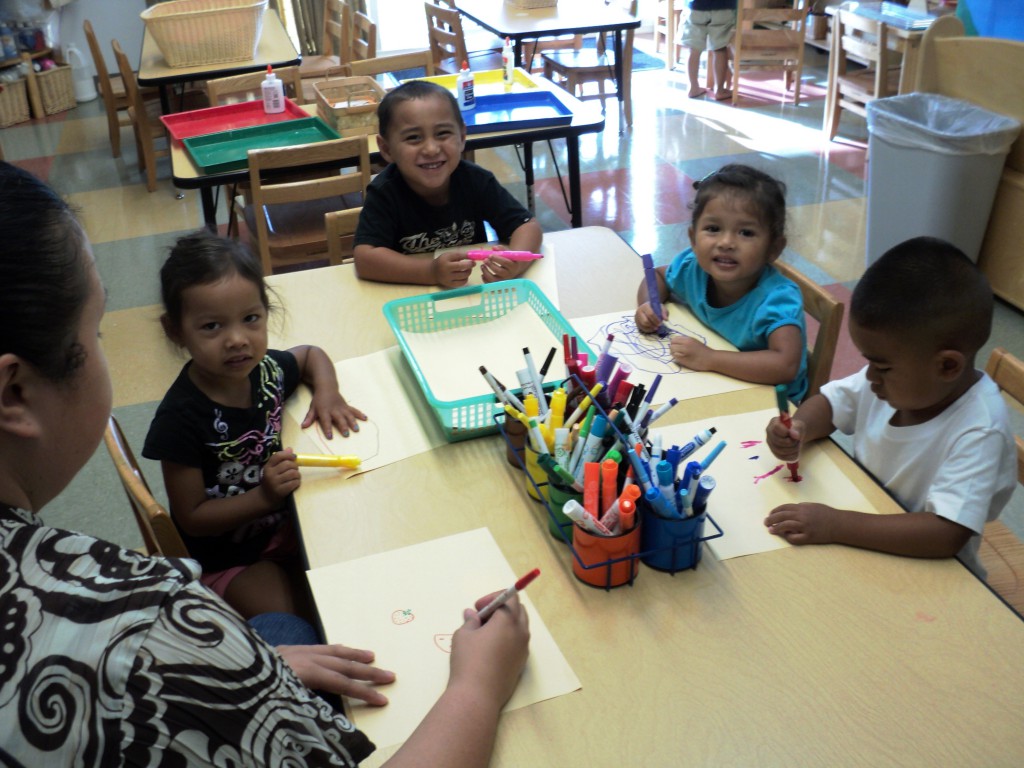 Today, Aunty Amy joined four children at the Writing Center. During centers and seat work, we move around the room asking students questions, playing with them, participating in their activities, and so forth. Our participation in the activities allows students to get the most out of the materials that are available. Our goal is also to develop oral language and build vocabulary by engaged the students in meaningful conversation. This participation serves to enhance the students’ involvement in the activities.
Monday, September 17, 2012
We did two collaborative art pieces today. One with hand prints and one with feet prints. Every child was persuaded to add to each piece. Collaboration is defined as working with others to create something. In the preschool classroom, we do collaborative art pieces because it encourages working towards a common shared goal, supports teamwork, helps promote a positive work ethic, and it provides an opportunity for children to engage in conversation with each other. Throughout the year, we will continue to do many collaboration art pieces. It will be displayed in the classroom.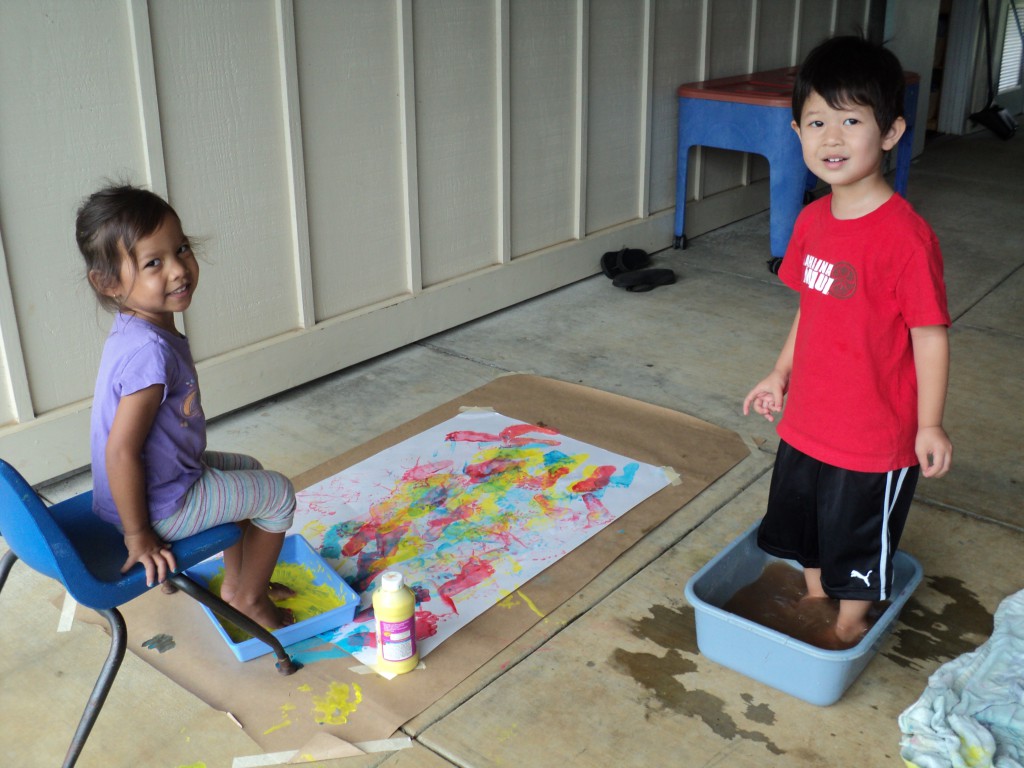
Thursday, September 13, 2012
This week, shaving cream replaced water in the water table. We placed plastic gems in there too. Sensory experiences all children to feel/smell/hear/see and sometimes taste the media they are using. It allows children to extend play and can provide experiences that they would not normally do in a home environment. And, of course, sensory play is lots of fun! 
Wednesday, September 12, 2012
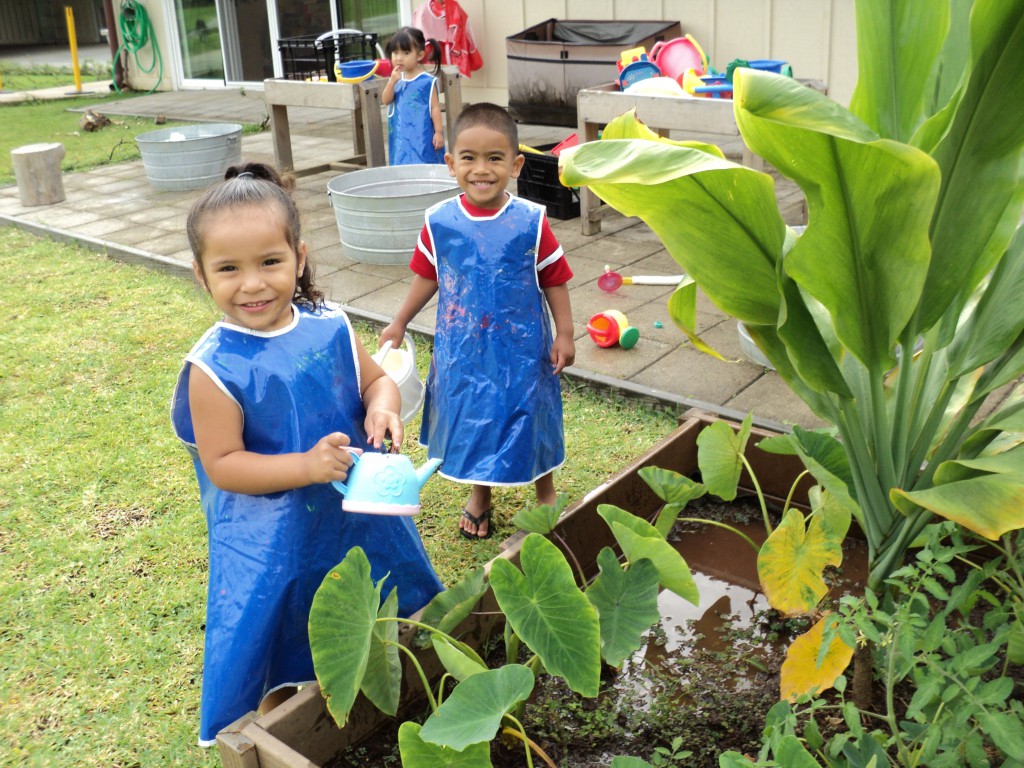 We have a mini lo’i kalo in our garden box by the Water Play area. Since that ground area is always wet and the children love using water cans there, we wanted to take advantage of the water and plant something that grows well in a soaked ground. The wind also blew in some tomatoes seeds and we planted one ti-leaf stalk there too. If you have any kalo plants or kalo huli that you’d be willing to donate, we would welcome more plants for that area.